A Street That Bends: What an Old Route Leaves in the Plan
A crooked street can reveal how its junctions, frontages and public spaces took shape. Read the route through the way people use it, not just the line it makes on a map.
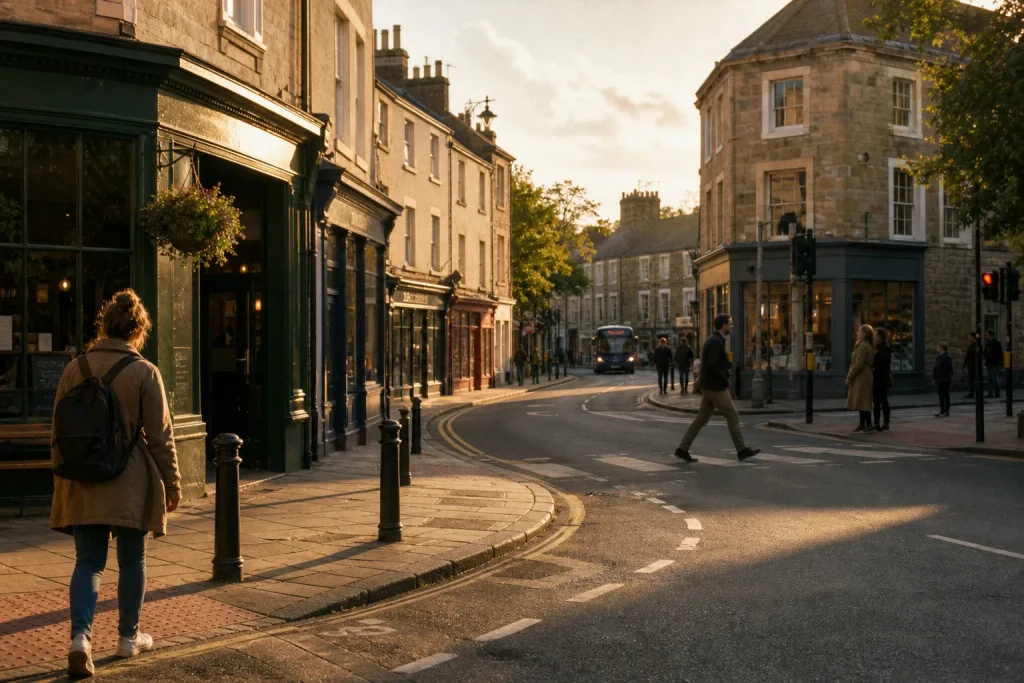
At a skewed junction, one pavement may widen into a little waiting place while the street opposite slips past at an angle. That awkward meeting can tell you how the street works now: where people cross, which way a bus or delivery van can turn, and which frontage gives the corner its shape. Its past matters, but the street is also a piece of public space, continually adjusted to serve changing movement.
Rather than treating every kink as a puzzle about ancient origins, look at the decisions the street makes visible. Where does it invite people to walk? Where does a building hold the pavement in, or a setback open a view? The answers help explain how a route became a place, and why later changes may have kept its crooked line.
A bend changes how people meet the street
A straight street offers a long view; a bend interrupts it. You discover what lies around the corner in stages, and a doorway or shopfront may become visible only as you approach. At a junction, an oblique approach can make one street feel like a continuation and another like a side route. These effects shape everyday movement even when nobody stops to think about them.
Notice where people naturally pause, cross or change direction. A broad corner might provide room for a queue outside a shop, while a tight turn can slow vehicles and make the pavement feel more exposed. The shape alone does not tell you why the street was made that way. It does, however, show how its geometry affects the experience of moving through it.
Buildings give the curve a public face
Street edges are made from more than road markings. A continuous row of houses or shops can hold a curve like a wall, directing attention along the frontage. A gap, recessed entrance or forecourt loosens that edge. Look at upper floors as well as ground-floor doors: a building may follow the street closely at pavement level while its roofline or upper wall takes a different course.
Corner buildings often make an angled junction legible. A shop with entrances on two sides can address both streets; a blank wall may instead make one approach feel like the back of the building. Neither arrangement proves that the building dictated the road’s course. It does show how architecture can reinforce, soften or redirect the way a bend is perceived.
Small changes can reshape a familiar corner
A street does not need a wholesale reconstruction to feel different. A new crossing, a relocated bus stop or a widened pavement can alter where people wait and which route feels convenient. A dropped kerb may make one crossing easier to use, while a line of bollards can keep vehicles from cutting across a pedestrian space. The details are modest, but they change how the street is shared.
Imagine a neighbourhood corner where the pavement narrows beside a shop entrance, and people waiting to cross spill into the walking line. Suppose the council moves the crossing point a little farther along the bend and adds a clear waiting area beside it. The observable result to look for would be whether pedestrians can wait without blocking the entrance and whether people approaching from both streets can see one another sooner. If the new position creates a longer or less direct crossing, that trade-off should be recorded too; a tidier corner is not automatically a better route for everyone.
Read the street through ordinary journeys
Follow a route from a specific starting point rather than surveying a bend as an isolated shape. Walk from a bus stop to a library, or from a side street to a local shop, and note where the pavement changes, where sightlines open and where crossing feels awkward. Repeat the same journey in the opposite direction: a corner that is easy to read on approach may be confusing when leaving it.
For a useful field note, record the starting point, the direction travelled and the visible feature that affected the journey. “Walking from the bus stop towards the library, the shop frontage hides the crossing until the corner” is more precise than “the junction is unsafe”. It describes an observation without making a safety judgement that would require a professional assessment.
Use a simple record to guide the next question
- Approach: Note which street you came from and what is visible before the bend. If the next crossing or entrance appears late, then record the obstruction and the direction; otherwise, note that the view remains open.
- Pavement: Observe where the walking space narrows or widens. If people have to pause or step aside at a pinch point, then note the nearby doorway, wall or street furniture; otherwise, record the stretch as clear for the journey observed.
- Crossing: Identify where people actually cross, not only where markings appear. If their route cuts across the corner, then note the direct line and what interrupts it; otherwise, record whether the marked crossing connects naturally to the pavements.
- Frontage: Note whether doors and windows face the bend. If one side is blank or set back, then describe how that changes the sense of enclosure; otherwise, record which entrances or active frontages meet the street.
- Waiting space: Look for people waiting at a stop, shop or crossing. If they obstruct the walking line, then note where they gather and what alternative space is available; otherwise, record where waiting happens without blocking movement.
- Street furniture: Check the position of signs, bins, poles and bollards. If an item narrows the route or blocks a sightline, then note its location and the direction affected; otherwise, record that it sits outside the observed walking line.
These notes do not establish the street’s full history or assess whether a layout meets design standards. They give you a specific question to pursue: did the junction’s shape guide later building, or did later buildings and street works make the bend function differently? If that question concerns access or safety, seek advice from the relevant local authority or a qualified professional.
A crooked corner is easiest to understand when you watch it in motion. Stand where the two streets meet, trace the approaches with your eyes, then follow one ordinary journey through the space. That small change of viewpoint can reveal which details deserve closer attention—and which are simply part of how the street works today.
Nearby stories
The Lane Beneath the Field: Following a Lost Boundary
A hedge, a hollow and a field name can preserve different parts of a landscape’s past.…
The Joint Between Two Eras: Brick Bonds as Building Clues
Read brick patterns as evidence of how a wall was put together, then compare them with…